
Technology
🔗 Blockchain 2025: The Future of Decentralization & AI
Added by: Ethan Brooks
What You'll Learn
- How blockchain technology works and its core components.
- How AI can be integrated with blockchain to detect and prevent fraudulent transactions.
- The differences between Bitcoin and Ethereum and their respective use cases.
Video Breakdown
This video explains blockchain technology, its applications beyond cryptocurrency, and how artificial intelligence can enhance its security by detecting fraudulent transactions. It covers the basics of blockchain structure, consensus mechanisms, smart contracts, and real-world use cases like Bitcoin and Ethereum, highlighting their strengths and limitations.
Key Topics
Blockchain Basics
AI Fraud Detection
Cryptocurrency Explained
Smart Contracts
Bitcoin vs Ethereum
Decentralization
Video Index
Understanding Blockchain Fundamentals
This module introduces the core concepts of blockchain technology, including its structure, security...
This module introduces the core concepts of blockchain technology, including its structure, security features, and consensus mechanisms.
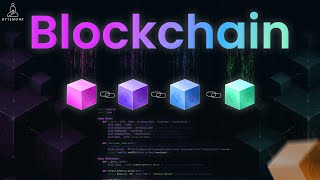
What is Blockchain?
0:00 - 0:38
Explains the basic concept of blockchain as a digital notebook shared across multiple computers.
Digital Ledger
Decentralization
Trustless System
Blockchain Structure and Security
0:54 - 1:47
Details the structure of a blockchain, including blocks, hashes, and how these elements ensure security.
Blocks
Hashes
Tamper-Proof
Consensus Mechanisms
2:06 - 2:41
Explains how consensus mechanisms like Proof of Work (PoW) and Proof of Stake (PoS) ensure the integrity of the blockchain.
Proof of Work
Proof of Stake
Validation
AI-Powered Fraud Detection in Blockchain
This module demonstrates how artificial intelligence can be integrated with blockchain to detect and...
This module demonstrates how artificial intelligence can be integrated with blockchain to detect and prevent fraudulent transactions.
Building a Simple Blockchain with Python
2:41 - 3:51
Walks through the process of creating a basic blockchain using Python code.
Python Code
Block Class
Genesis Block
Training an AI Model for Fraud Detection
3:51 - 4:47
Explains how to train an AI model using libraries like Pandas, NumPy, and Scikit-learn to identify fraudulent transactions.
Pandas
Numpy
Scikit-Learn
Integrating AI to Block Fraudulent Transactions
4:47 - 6:07
Demonstrates how the trained AI model can be used to flag and prevent fraudulent transactions from being added to the blockchain.
Fraud Prevention
Transaction Validation
AI Integration
Blockchain Applications: Cryptocurrency and Smart Contracts
This module explores the applications of blockchain in cryptocurrency, focusing on Bitcoin and Ether...
This module explores the applications of blockchain in cryptocurrency, focusing on Bitcoin and Ethereum, and explains the concept of smart contracts.
Bitcoin: Decentralized Digital Currency
6:07 - 7:35
Explains Bitcoin as the first decentralized cryptocurrency and its advantages over traditional banking systems.
Decentralization
Borderless Transactions
Secure Transactions
Ethereum: Smart Contracts and Beyond
7:35 - 9:43
Introduces Ethereum and its smart contract functionality, enabling self-executing agreements on the blockchain.
Smart Contracts
Oracles
Automated Agreements
Bitcoin vs. Ethereum: A Comparison
9:43 - 11:10
Compares Bitcoin and Ethereum, highlighting their differences in functionality, security, and use cases.
Digital Gold
Limited Supply
Security Risks
Questions This Video Answers
What is blockchain technology?
Blockchain is a decentralized, digital ledger that records transactions across many computers. Each block contains a set of transactions, a hash, and the hash of the previous block, creating a secure and transparent chain.
How does AI enhance blockchain security?
AI can be trained on historical transaction data to identify patterns indicative of fraud. By integrating AI, fraudulent transactions can be detected and blocked before they are added to the blockchain.
What are smart contracts and how do they work?
Smart contracts are self-executing agreements written in code and stored on the blockchain. They automatically execute when predefined conditions are met, eliminating the need for intermediaries.
What are the key differences between Bitcoin and Ethereum?
Bitcoin is primarily a decentralized digital currency, while Ethereum is a platform that supports smart contracts and decentralized applications (dApps). Bitcoin focuses on secure value storage and transfer, while Ethereum offers broader functionality.
Related Videos
Want to break down another video?
Break down another video