
What You'll Learn
- How the James Webb Space Telescope utilizes infrared light to observe distant objects and phenomena in the universe.
- The key differences between the James Webb and Hubble Space Telescopes and the advantages of infrared astronomy.
- The scientific goals and potential discoveries related to galaxy formation, exoplanet analysis, and the early universe using the JWST.
Video Breakdown
This lecture provides a comprehensive overview of the James Webb Space Telescope (JWST), contrasting it with the Hubble Space Telescope and detailing its launch, deployment, and orbit. It explores the JWST's capabilities in infrared astronomy, showcasing early images and scientific discoveries related to planets, stars, galaxies, and the early universe. The lecture also addresses questions about the telescope's functionality, limitations, and impact on our understanding of cosmology and astrophysics.
Key Topics
JWST Capabilities
Infrared Observation
Early Universe
Exoplanet Analysis
Galaxy Formation
Telescope Technology
Video Index
Introduction to the James Webb Space Telescope
This module introduces the JWST, comparing it to Hubble, detailing its launch, deployment, and orbit...
This module introduces the JWST, comparing it to Hubble, detailing its launch, deployment, and orbit at the L2 Lagrange point, and outlining its four main scientific goals.
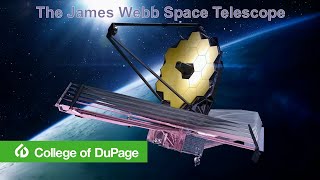
JWST Overview and Comparison to Hubble
0:03 - 6:05
Introduces the JWST and compares it to the Hubble Space Telescope, highlighting the differences in their capabilities and objectives.
JWST
Hubble
Space Telescopes
Telescope Comparison
Launch, Deployment, and Orbit
6:05 - 12:07
Details the launch and deployment process of the JWST and explains its unique orbit at the L2 Lagrange point.
JWST Launch
Deployment
L2 Lagrange Point
Space Orbit
JWST Functionality and Early Observations
This module details how the JWST works, including its unfolding process, infrared light observation,...
This module details how the JWST works, including its unfolding process, infrared light observation, and image processing, and showcases early images of Jupiter and Neptune.
How the JWST Works
12:05 - 18:06
Explains the unfolding process, infrared light observation, and image processing techniques used by the JWST.
Telescope Functionality
Infrared Detection
Image Reconstruction
Early Images: Jupiter and Neptune
18:06 - 24:08
Showcases early images of Jupiter and Neptune, highlighting the telescope's capabilities and the scientific insights gained.
Jupiter Images
Neptune Images
Planetary Observation
JWST Discoveries
Scientific Discoveries and Comparative Analysis
This module discusses observations made by the JWST, including the discovery of rings and water arou...
This module discusses observations made by the JWST, including the discovery of rings and water around an asteroid, the imaging of an extrasolar planet, and detailed views of star formation and death within nebulae.
Observations of Asteroids and Exoplanets
24:06 - 30:08
Details the discovery of rings and water around an asteroid and the imaging of an extrasolar planet.
Asteroid Rings
Exoplanet Imaging
Water Detection
Space Discoveries
Star Formation and Nebulae
30:08 - 36:10
Highlights JWST's capabilities in analyzing planetary atmospheres and comparing its performance with the Hubble Telescope in observing star formation and death within nebulae.
Star Formation
Nebulae
Planetary Atmospheres
Hubble Comparison
Hubble vs. James Webb: A Detailed Comparison
This module compares images from the Hubble and James Webb telescopes, highlighting the increased de...
This module compares images from the Hubble and James Webb telescopes, highlighting the increased detail and scientific insights gained from Webb's infrared capabilities.
Enhanced Detail with Infrared
36:07 - 42:08
Focuses on the increased detail and scientific insights gained from Webb's infrared capabilities, particularly in observing star formation.
Infrared Imaging
Star Formation
Telescope Comparison
Image Quality
Galactic Interactions and the Expanding Universe
42:08 - 48:09
Discusses galactic collisions, Stefan's Quintet, the Phantom Galaxy, and introduces the concept of the expanding universe in relation to Webb's capabilities.
Galactic Collisions
Stefan'S Quintet
Phantom Galaxy
Expanding Universe
Observing the Distant Universe with Redshift
This module explains how the JWST is designed to observe infrared light, which is crucial for seeing...
This module explains how the JWST is designed to observe infrared light, which is crucial for seeing the most distant objects due to redshift, and discusses the first deep field image.
The Importance of Infrared and Redshift
48:08 - 54:10
Explains how the JWST is designed to observe infrared light and why this is crucial for seeing the most distant objects in the universe due to redshift.
Infrared Light
Redshift
Distant Objects
Cosmology
Deep Field Image and Gravitational Lensing
54:10 - 1:00:13
Discusses the first deep field image taken by JWST, highlighting the phenomenon of gravitational lensing and the discovery of globular star clusters in a distant galaxy.
Deep Field Image
Gravitational Lensing
Globular Star Clusters
Galaxy Evolution
Capabilities, Cost, and Lifespan of the JWST
This module discusses the capabilities of the JWST, including its ability to observe early galaxy fo...
This module discusses the capabilities of the JWST, including its ability to observe early galaxy formation, study stellar evolution, and analyze exoplanets, and addresses questions about its cost, orbit, and potential lifespan.
JWST's Observational Capabilities
1:00:10 - 1:06:12
Details the capabilities of the JWST in observing early galaxy formation, studying stellar evolution, and analyzing exoplanets.
Galaxy Formation
Stellar Evolution
Exoplanet Analysis
Observational Astronomy
Cost, Orbit, and Lifespan Considerations
1:06:12 - 1:12:14
Addresses questions about the telescope's cost, orbit, potential lifespan, and the impact of space dust.
Telescope Cost
Orbit
Lifespan
Space Dust
Q&A: Telescope Maintenance, Limitations, and Cosmology
This module covers a Q&A session, addressing topics such as mirror damage, the possibility of repair...
This module covers a Q&A session, addressing topics such as mirror damage, the possibility of repairs, fuel limitations, gravitational lensing, exoplanet detection methods, and the relationship between time, light, and the expanding universe.
Telescope Maintenance and Limitations
1:12:10 - 1:18:11
Addresses questions about mirror damage on the telescope, the possibility of repairs, and fuel limitations.
Mirror Damage
Telescope Repair
Fuel Limitations
Telescope Maintenance
Cosmology and Exoplanet Detection
1:18:11 - 1:24:13
Covers gravitational lensing, exoplanet detection methods, and the relationship between time, light, and the expanding universe.
Gravitational Lensing
Exoplanet Detection
Time and Light
Expanding Universe
Cosmic Microwave Background and Star Explosions
This module addresses audience questions about the cosmic microwave background and the possibility o...
This module addresses audience questions about the cosmic microwave background and the possibility of a chain reaction of star explosions, explaining why such events are unlikely.
Cosmic Microwave Background
1:24:11 - 1:26:56
Addresses audience questions about the cosmic microwave background.
Cosmic Microwave Background
Early Universe
Cosmology
Star Explosions and Collisions
1:26:56 - 1:29:41
Explains why a chain reaction of star explosions is unlikely due to the vast distances between stars and touches on the rarity of star collisions.
Star Explosions
Star Collisions
Nebula Formation
Astrophysics
Questions This Video Answers
What is the primary advantage of the James Webb Space Telescope over the Hubble Space Telescope?
The JWST's ability to observe infrared light allows it to see through dust clouds and observe more distant objects, providing insights into the early universe and star formation that are not possible with Hubble.
How does the James Webb Space Telescope observe the earliest light in the universe?
Due to the expansion of the universe, light from distant objects is redshifted into the infrared spectrum. JWST's infrared capabilities allow it to detect this redshifted light, providing a glimpse into the early universe.
What is gravitational lensing, and how does the JWST use it?
Gravitational lensing occurs when the gravity of a massive object bends and magnifies light from objects behind it. JWST uses this phenomenon to observe even more distant and faint objects than would otherwise be possible.
What are some of the limitations of the James Webb Space Telescope?
The JWST has a limited lifespan due to its fuel supply, which is needed to maintain its orbit. Also, while mirror damage is a concern, it is designed to withstand some impacts. Unlike Hubble, it cannot be easily repaired in space.
How does the JWST contribute to the study of exoplanets?
The JWST can analyze the atmospheres of exoplanets by observing the light that passes through them, allowing scientists to determine their composition and potentially identify signs of habitability.
Why is the JWST located at the L2 Lagrange point?
The L2 Lagrange point provides a stable and thermally consistent environment for the JWST, allowing it to maintain a constant orientation relative to the Sun, Earth, and Moon, which is crucial for its infrared observations.
What are some of the early discoveries made by the James Webb Space Telescope?
Early discoveries include the detection of water and rings around an asteroid, detailed images of Jupiter and Neptune, observations of star formation in nebulae, and the identification of globular star clusters in distant galaxies.
How does the JWST help us understand galaxy evolution?
By observing distant galaxies and galactic collisions, the JWST provides insights into how galaxies form, evolve, and interact over cosmic time, helping us understand the history and future of the universe.
Related Videos
Want to break down another video?
Break down another video