
Technology
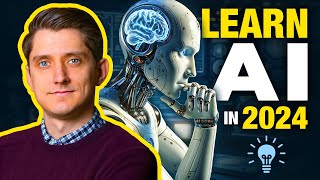
You need to learn AI in 2024! (And here is your roadmap)
Added by: Arjun Rao
What You'll Learn
- Develop a practical understanding of AI concepts and terminology.
- Learn how to use Python and PyTorch to train and deploy AI models.
- Identify career opportunities in AI and how to prepare for them.
Video Breakdown
This video provides a roadmap for learning AI in 2024, emphasizing practical skills and opportunities while separating hype from reality. It covers essential programming languages, frameworks, and learning resources, offering guidance for both beginners and those looking to advance their AI knowledge for career opportunities.
Key Topics
AI Roadmap
Python for AI
Pytorch Framework
Supervised Learning
AI Opportunities
AI Hype vs Reality
Video Index
Introduction to AI and the Current Landscape
This module introduces the current state of AI in 2024, addressing hype versus reality, and the incr...
This module introduces the current state of AI in 2024, addressing hype versus reality, and the increasing prevalence of image generation. It also touches on regulatory problems and the speed of AI development.
The State of AI in 2024
0:00 - 2:09
Discusses the rapid movement of AI, the ongoing hype, and advancements in image generation.
AI Hype
Image Generation
AI Chatbots
Realism and Regulatory Concerns
2:09 - 2:59
Explores the increasing realism of AI-generated images and the regulatory challenges this poses.
Image Authenticity
Regulatory Issues
Deepfakes
Opportunities and Concerns in the AI Field
This module discusses the opportunities and worries surrounding AI, including job displacement and t...
This module discusses the opportunities and worries surrounding AI, including job displacement and the limitations of current AI tools. It also touches on unanswered questions regarding AI-generated content ownership.
AI's Impact on Jobs
3:19 - 4:38
Addresses concerns about AI taking away knowledge worker jobs and the current limitations of AI tools.
Job Security
AI Capabilities
Boilerplate Code
AI Vulnerabilities and Trust
4:38 - 5:42
Discusses the potential for AI-generated code to contain vulnerabilities and the need for human oversight.
Code Vulnerabilities
AI Trust
Company Policies
The Future of AGI
5:42 - 6:11
Explores the concept of Artificial General Intelligence (AGI) and the likelihood of its near-term development.
AGI Timeline
AI Advancements
Chatbot Improvements
Practical Steps to Learn and Leverage AI
This module outlines practical steps for learning AI, including essential programming languages, fra...
This module outlines practical steps for learning AI, including essential programming languages, frameworks, and the importance of understanding the underlying concepts. It also covers supervised vs. unsupervised learning.
Essential Skills: Python and PyTorch
10:11 - 12:51
Highlights the importance of learning Python and PyTorch as entry points to AI.
Python Basics
Pytorch Framework
Data Structures
Understanding AI Learning Types
12:51 - 13:53
Explains the difference between supervised and unsupervised learning and their applications.
Supervised Learning
Unsupervised Learning
AI Configurations
PyTorch Resources and Tutorials
13:53 - 14:36
Recommends PyTorch's GitHub examples and tutorials as valuable learning resources.
Pytorch Github
Pytorch Tutorials
Auto Differentiation
Recommended Courses, Resources, and Learning Strategies
This module recommends specific courses and learning strategies, emphasizing the importance of under...
This module recommends specific courses and learning strategies, emphasizing the importance of understanding fundamental concepts and terminology. It also touches on the overwhelming amount of research in the AI field.
Recommended Courses and Specializations
14:37 - 16:13
Recommends Andrew Ng's Machine Learning course on Coursera and the Deep Learning specialization.
Coursera Courses
Machine Learning Fundamentals
Deep Learning
Coping with Information Overload
16:13 - 17:36
Discusses the overwhelming amount of research in AI and strategies for staying informed.
AI Research
Technology Shifts
Learning Resources
Opportunities for Non-Experts
17:36 - 18:09
Highlights opportunities for individuals without PhDs to work in AI by acquiring base-level knowledge.
AI Opportunities
Base Knowledge
Learning by Doing
Domain-Specific AI, Segment Anything, and Job Opportunities
This module explores the shift towards domain-specific AI, the functionality of 'Segment Anything,' ...
This module explores the shift towards domain-specific AI, the functionality of 'Segment Anything,' and the diverse job opportunities available in the AI field. It emphasizes the importance of understanding AI fundamentals for career advancement.
The Rise of Domain-Specific AI
18:17 - 19:21
Discusses the potential shift towards domain-specific AI and its benefits for specific research areas.
Domain-Specific AI
Large Language Models
Medical Imaging
Understanding 'Segment Anything'
19:21 - 20:55
Explains the functionality of 'Segment Anything' and its applications in image segmentation.
Segment Anything
Image Segmentation
Meta AI
Diverse Job Roles in the AI Pipeline
20:55 - 22:58
Outlines the various job roles within the AI pipeline and the importance of AI understanding for technical professionals.
AI Job Roles
Data Engineering
Web Interface
Levels of AI Engagement and Practical Resources
This module breaks down AI engagement into three levels: basic interaction, API usage, and model tra...
This module breaks down AI engagement into three levels: basic interaction, API usage, and model training. It also recommends Google Colab as a low-cost resource for learning and experimenting with AI.
Three Levels of AI Engagement
26:56 - 30:28
Explains the three levels of AI engagement and the opportunities in each.
AI Interaction
API Programming
Model Customization
Practical Resources: Google Colab
31:26 - 33:40
Recommends Google Colab as a low-cost resource for learning and experimenting with AI.
Google Colab
Jupyter Notebook
GPU Access
Advice for Beginners and Career Changers
This module provides advice for beginners and career changers looking to enter the AI field. It emph...
This module provides advice for beginners and career changers looking to enter the AI field. It emphasizes the importance of computer science fundamentals, Python, PyTorch, and supervised learning. It also addresses concerns about job displacement and encourages individuals to ride the AI wave.
Essential Skills and Learning Paths
35:16 - 39:17
Recommends computer science fundamentals, Python, PyTorch, and supervised learning as essential skills.
Python Programming
Pytorch Framework
Supervised Learning
Addressing Job Displacement Concerns
39:17 - 42:57
Addresses concerns about job displacement and encourages individuals to acquire AI skills.
AI Hype
AI Applications
Career Opportunities
The AI Roadmap: Skills and Supervised Learning
42:57 - 45:21
Provides a roadmap for learning AI, emphasizing Python, PyTorch, and supervised learning.
Python
Pytorch
Supervised Learning
AI Career
Questions This Video Answers
Is AI going to take away jobs?
The experts in the video don't think AI will replace jobs, especially if you have AI knowledge. AI creates new opportunities and requires skilled professionals.
What is the best way to get started learning AI?
Start with Python, then learn PyTorch, and focus on supervised learning models. Utilize resources like Google Colab and online courses.
Do I need a PhD to work in AI?
No, a PhD is not necessary. A baseline level of AI knowledge can be acquired in a few weeks or months, and you can learn on the job.
What are the essential tools and resources for learning AI?
Python, PyTorch, Google Colab, online courses (like Andrew Ng's course on Coursera), and GitHub repositories are highly recommended.
What is 'Segment Anything'?
Segment Anything is a foundational large model released by Meta that segments all the things it can see in a scene and give some labels as to what they think they are. It's transformative in the segmentation space.
What is the difference between the three groups of AI users?
The first group interacts with AI through front-end interfaces. The second group leverages AI through APIs and Python scripting. The third group focuses on training and modifying AI models.
Related Videos
Want to break down another video?
Break down another video