What You'll Learn
- How the innate immune system responds to a bacterial invasion.
- The roles of macrophages and neutrophils in the initial defense.
- How the adaptive immune system is activated by dendritic cells and helper T cells.
Video Breakdown
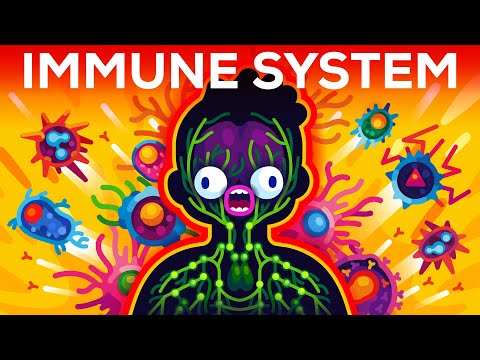
This video provides an overview of how the human immune system works, focusing on the initial response to an invasion of bacteria. It explains the roles of various immune cells like macrophages, neutrophils, helper T cells, and B cells, and the process of inflammation and antibody production.
Key Topics
Immune System
First Line Defense
Macrophages Role
Neutrophil Function
Dendritic Cells
Helper T Cells
Video Index
Introduction to the Immune System
This module introduces the complexity of the immune system and sets the stage for understanding its ...
This module introduces the complexity of the immune system and sets the stage for understanding its functions. It highlights the immune system's role in protecting the body from microorganisms and cancerous cells.
The Immune System as a Complex System
0:01 - 0:14
Introduction to the immune system's complexity and its comparison to the human brain.
Complex System
Biological Defense
Components of the Immune System
0:13 - 0:24
Overview of the organs and transport network that make up the immune system.
Organs
Transport Network
The Immune System's Role
0:37 - 0:49
Explanation of the immune system's function in protecting against microorganisms and cancer.
Protection
Microorganisms
Cancer
First Line of Defense: Initial Response to Invasion
This module details the immediate response to a bacterial invasion, focusing on the roles of macroph...
This module details the immediate response to a bacterial invasion, focusing on the roles of macrophages and neutrophils. It also covers the process of inflammation and the action of complement proteins.
The Initial Invasion and Alarm Signals
1:10 - 2:07
Description of a bacterial invasion and the release of chemical alarm signals by damaged cells.
Bacterial Invasion
Alarm Signals
Macrophages and Neutrophils: The First Responders
2:07 - 3:26
Explanation of the roles of macrophages and neutrophils in attacking and killing bacteria.
Macrophages
Neutrophils
Killing Bacteria
Inflammation and Complement Proteins
3:47 - 4:25
Description of the inflammatory response and the function of complement proteins in fighting bacteria.
Inflammation
Complement Proteins
Adaptive Immunity: Activating the Second Line of Defense
This module explains how the adaptive immune system is activated, focusing on the roles of dendritic...
This module explains how the adaptive immune system is activated, focusing on the roles of dendritic cells, helper T cells, and B cells. It also covers the production of antibodies and the formation of memory cells.
Dendritic Cells and Helper T Cell Activation
4:25 - 6:13
Explanation of how dendritic cells activate helper T cells to initiate the adaptive immune response.
Dendritic Cells
Helper T Cells
Activation
Amplifying the Response: Cloning and Activation
6:13 - 7:32
Description of how helper T cells clone themselves and activate other immune cells, including macrophages and B cells.
Cloning
Macrophage Activation
B Cell Activation
Antibody Production and Long-Term Immunity
7:32 - 9:17
Explanation of how B cells produce antibodies and how memory cells provide long-term immunity.
Antibody Production
Memory Cells
Long-Term Immunity
Questions This Video Answers
What is the first line of defense in the immune system?
The first line of defense involves cells like macrophages and neutrophils that attack and kill invading bacteria at the site of infection.
How do helper T cells contribute to the immune response?
Helper T cells activate other immune cells, such as macrophages and B cells, to enhance their ability to fight infection. They also differentiate into memory cells for future protection.
What is the role of B cells in the immune system?
B cells produce antibodies, which are proteins that bind to bacteria, neutralizing them and marking them for destruction by other immune cells.
What are memory cells and why are they important?
Memory cells are long-lived immune cells that remain after an infection is cleared. They provide long-term immunity by quickly recognizing and responding to the same pathogen if it invades again.
Related Videos
Want to break down another video?
Break down another video