
What You'll Learn
- Understand the definition of exercise physiology and its importance in various fields.
- Identify credible sources of information for exercise physiology research.
- Recognize the benefits of studying exercise physiology for prescribing safe and effective exercise.
Video Breakdown
This video provides an introduction to exercise physiology, explaining its relationship to general physiology and outlining the importance of understanding research in the field. It covers why and who should study exercise physiology, different types of exercise (acute and chronic), and the importance of credible sources of information.
Key Topics
Exercise Physiology Definition
Acute vs Chronic Exercise
Benefits of Studying
Target Audience
Physiology as Science
Research Credibility
Video Index
Introduction to Exercise Physiology
This module introduces the definition of exercise physiology, its relationship to physiology, and th...
This module introduces the definition of exercise physiology, its relationship to physiology, and the concepts of acute and chronic exercise. It also touches upon the importance of studying exercise physiology.
Defining Exercise Physiology
0:25 - 0:55
This chapter defines physiology and then extends that definition to exercise physiology, emphasizing the study of body systems during exercise.
Physiology Definition
Exercise Physiology Definition
Acute vs. Chronic Exercise
1:07 - 1:54
This chapter differentiates between acute and chronic exercise and their effects on the body's systems.
Acute Exercise
Chronic Exercise
Contextual Factors
1:54 - 2:24
This chapter discusses the importance of studying exercise physiology in context with factors like weather, age, health status, and gender.
Environmental Factors
Individual Differences
Why Study Exercise Physiology?
This module explores the reasons for studying exercise physiology, including improving fitness, pres...
This module explores the reasons for studying exercise physiology, including improving fitness, prescribing injury recovery plans, and promoting worthwhile physical activity.
Improving Fitness and Performance
2:26 - 3:23
This chapter discusses how exercise physiology helps in choosing the right fitness tests, prescribing safe and effective exercise, and optimizing training time.
Fitness Assessment
Exercise Prescription
Understanding Physical Demands
3:31 - 4:24
This chapter focuses on understanding the demands placed on the body during physical work and recreational activities.
Physical Work Demands
Clinical Considerations
Injury and Illness Recovery
4:22 - 5:01
This chapter explains how exercise physiology is crucial for prescribing injury and illness recovery plans.
Rehabilitation Plans
Athletic Training
Promoting Physical Activity
5:01 - 5:49
This chapter emphasizes the importance of promoting worthwhile physical activity for children and adults to combat sedentary lifestyles and improve health.
Obesity Epidemic
Sedentary Lifestyles
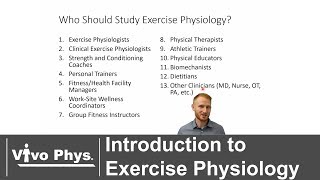
Who Should Study Exercise Physiology?
This module identifies the professionals who benefit from studying exercise physiology, including ex...
This module identifies the professionals who benefit from studying exercise physiology, including exercise physiologists, clinicians, coaches, and therapists, emphasizing the importance of exercise for overall well-being.
Target Professions
5:52 - 6:45
This chapter lists various professions that require knowledge of exercise physiology to perform their jobs effectively.
Exercise Physiologists
Clinical Professions
Exercise as Medicine
6:45 - 7:27
This chapter highlights the benefits of exercise for physical and mental well-being and encourages clinicians to prescribe and promote it effectively.
Exercise Benefits
Clinical Application
Physiology as a Science and Research
This module emphasizes that physiology is a science based on research and the scientific method. It ...
This module emphasizes that physiology is a science based on research and the scientific method. It highlights the importance of understanding the research behind physiological concepts and the limitations of research.
The Scientific Basis of Physiology
7:35 - 8:09
This chapter explains that physiology is a science based on the scientific method and research.
Scientific Method
Research Importance
Understanding Research Limitations
8:09 - 9:20
This chapter discusses the importance of understanding the research behind physiological concepts, including their strengths and limitations.
Research Limitations
Physiologist Struggles
Credible Sources of Information
This module presents a ranked list of credible sources of information, from major organizations' pos...
This module presents a ranked list of credible sources of information, from major organizations' position statements to random individuals, emphasizing the importance of peer-reviewed research and caution against biased sources.
Ranking Credible Sources
9:36 - 15:28
This chapter presents a ranked order of credible sources, from major organizations' position statements to conference proceedings.
Position Statements
Textbooks
Journal Articles
Less Credible Sources
15:28 - 19:11
This chapter discusses less credible sources, including websites from non-major organizations, companies promoting products, and random individuals.
Conference Proceedings
Company Websites
Random Individuals
Major Credible Organizations
19:11 - 20:36
This chapter lists major credible organizations in the field of exercise physiology, such as ACSM and NSCA.
ACSM
NSCA
NIH
CDC
Research Databases
20:36 - 21:45
This chapter introduces research databases like PubMed and Google Scholar for finding research-based information.
Pubmed
Google Scholar
Questions This Video Answers
What is exercise physiology?
Exercise physiology is the study of how the body's systems function during exercise and after exercise training, considering factors like weather and individual differences.
Why is it important to study exercise physiology?
Studying exercise physiology helps in understanding how the body responds to exercise, choosing appropriate fitness tests, prescribing safe and effective exercise, optimizing training, and promoting worthwhile physical activity.
Who should study exercise physiology?
Exercise physiologists, clinical exercise physiologists, strength and conditioning coaches, personal trainers, fitness managers, physical therapists, athletic trainers, dietitians, and various clinicians should study exercise physiology.
What are some credible sources of information in exercise physiology?
Credible sources include major organizations' position statements, reputable textbooks, journal review articles, and peer-reviewed original research articles. Major organizations include ACSM and NSCA.
What is the difference between acute and chronic exercise?
Acute exercise refers to the immediate response of the body to a single bout of exercise, while chronic exercise refers to the long-term adaptations of the body to regular exercise training.
Why is understanding research important in exercise physiology?
Understanding the research behind exercise physiology helps to understand the strengths and limitations of the information and the struggles that physiologists face in developing this information.
Related Videos
Want to break down another video?
Break down another video