What You'll Learn
- Understand the six key physiological systems impacting endurance performance and their points of failure.
- Learn how to optimize training by addressing specific limitations in each system, such as improving capillary density or enhancing stroke volume.
- Discover the importance of respiratory muscle training and proper breathing techniques for endurance athletes.
Video Breakdown
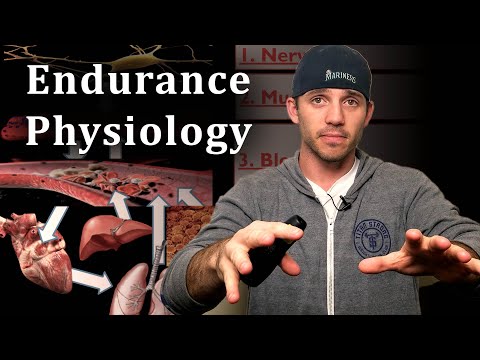
This video provides a comprehensive breakdown of the physiological systems involved in endurance, fatigue, and conditioning. It covers neurological, muscular, circulatory, respiratory, and metabolic factors, offering practical insights for training and performance optimization.
Key Topics
Neurological Fatigue
Muscle Glycogen
Capillary Density
Blood Volume
Cardiac Output
VO2 Max Equation
Video Index
Introduction to Endurance Physiology
This module introduces the concept of endurance physiology, emphasizing a whole-body approach and th...
This module introduces the concept of endurance physiology, emphasizing a whole-body approach and the importance of understanding metabolism and bioenergetics. It sets the stage for exploring the physiological reasons behind fatigue and the role of VO2 max.

Defining Endurance and Setting the Stage
0:03 - 0:49
This chapter defines endurance from the speaker's perspective and highlights the importance of understanding this definition for the rest of the video. It also clarifies that programming and exercise selection are covered in separate videos.
Endurance Definition
Video Prerequisites
Programming Exclusions
Metabolism and Cellular Energy
1:09 - 2:00
This chapter stresses the importance of understanding how the body makes cellular energy for exercise, including the use of fat versus carbohydrates and the role of the liver, blood, and muscle in providing fuel.
Cellular Energy
Fat vs. Carbs
Fuel Sources
Systematic Approach to Fatigue
2:16 - 2:44
This chapter explains the video's unique approach to understanding fatigue, moving beyond textbook explanations of energy systems to a more holistic, whole-body perspective.
Fatigue Causes
Holistic Approach
VO2 Max Intro
Neurological and Muscular Systems in Endurance
This module explores the roles of the neurological and muscular systems in endurance performance. It...
This module explores the roles of the neurological and muscular systems in endurance performance. It covers carbohydrate metabolism in nerves, ATP usage for nerve function, and the energy sources and limitations within muscles.
Neurological System and Fatigue
11:15 - 12:11
This chapter discusses the role of the nervous system in endurance, focusing on its reliance on carbohydrate metabolism and the importance of ATP for nerve function.
Nerve Metabolism
Carb Dependency
Sodium-Potassium Pump
Muscle Energy Stores and Fatigue
13:20 - 14:11
This chapter examines the energy sources within muscles (phosphocreatine, glycogen, fat) and how depletion of these stores contributes to fatigue.
Muscle Glycogen
Phosphocreatine
Intramuscular Fat
Metabolic Speed and pH Balance
14:11 - 14:51
This chapter discusses how the speed of metabolic processes and pH levels within the muscle affect fatigue.
Metabolic Rate
Ph Impact
Enzyme Function
Blood and Oxygen Delivery
This module focuses on the role of blood in delivering nutrients and removing waste products from mu...
This module focuses on the role of blood in delivering nutrients and removing waste products from muscles. It discusses glucose and fat storage in blood, oxygen transport, and the importance of capillary density.
Blood's Role in Nutrient and Waste Transport
15:00 - 16:13
This chapter explains how blood delivers glucose, fat, and oxygen to muscles and removes carbon dioxide, lactate, and hydrogen ions.
Nutrient Delivery
Waste Removal
Gas Exchange
Capillary Density and Muscle Fatigue
16:13 - 17:15
This chapter emphasizes the importance of capillary density for efficient exchange of nutrients and waste products between blood and muscle.
Capillary Importance
Blood Flow
Training Adaptations
Blood Composition and Adaptations to Training
This module delves into the composition of blood, including plasma and red blood cells, and discusse...
This module delves into the composition of blood, including plasma and red blood cells, and discusses how endurance training affects total blood volume, red blood cell count, and hematocrit.
Components of Blood and Hematocrit
17:15 - 18:09
This chapter breaks down the components of blood (plasma and red blood cells) and defines hematocrit as the percentage of blood volume made up of red blood cells.
Plasma
Red Blood Cells
Hematocrit Definition
Blood Doping and Hematocrit Manipulation
18:09 - 19:31
This chapter discusses blood doping and how athletes can artificially manipulate their hematocrit levels to enhance performance.
Blood Doping
Hematocrit Regulation
Athletic Regulations
Blood Volume Adaptations to Endurance Training
19:31 - 21:10
This chapter explains how endurance training increases total blood volume and red blood cell count, leading to improved oxygen delivery.
Total Blood Volume
Red Blood Cell Count
Training Benefits
Capillary Density and Gas Exchange
This module explains the structure and function of capillaries, emphasizing their role in gas exchan...
This module explains the structure and function of capillaries, emphasizing their role in gas exchange and nutrient delivery. It also discusses how increased capillary density improves performance.
Arteries, Veins, and Capillary Structure
23:10 - 23:58
This chapter describes the structure of arteries, veins, and capillaries, highlighting the transition from arteries to capillaries within muscles.
Artery Function
Vein Function
Capillary Structure
Enhancing Gas Exchange Through Capillaries
23:58 - 25:28
This chapter explains how capillaries enhance gas exchange by slowing down blood flow and increasing the surface area for exchange.
Gas Exchange
Blood Flow Velocity
Surface Area
Capillary Density and Nutrient Extraction
25:28 - 26:18
This chapter discusses how increased capillary density improves nutrient extraction and waste removal, leading to better endurance performance.
Nutrient Extraction
Waste Removal
Performance Improvement
Liver, Adipose Tissue, and Blood Glucose Regulation
This module explores the roles of the liver and adipose tissue in regulating blood glucose levels an...
This module explores the roles of the liver and adipose tissue in regulating blood glucose levels and providing fuel during exercise. It discusses glycogen storage in the liver and fat mobilization from adipose tissue.
Liver's Role in Blood Glucose Maintenance
26:16 - 27:01
This chapter explains how the liver releases glucose into the blood to maintain blood sugar levels, especially to fuel the brain.
Glycogen Storage
Glucose Release
Brain Fuel
Liver Glycogen Depletion and 'Hitting the Wall'
28:04 - 28:44
This chapter discusses what happens when liver glycogen stores are depleted, leading to a significant drop in performance.
Glycogen Depletion
Performance Decline
Sports Nutrition
Adipose Tissue and Fat Mobilization
28:44 - 29:36
This chapter explains how adipose tissue provides fat as a fuel source during exercise, although fat mobilization is a slower process than glycogen utilization.
Fat Storage
Fat Mobilization
Fuel Efficiency
Cardiovascular Physiology and VO2 Max
This module covers cardiovascular physiology, including heart rate, stroke volume, and cardiac outpu...
This module covers cardiovascular physiology, including heart rate, stroke volume, and cardiac output. It explains how these factors contribute to VO2 max and how training adaptations improve cardiovascular function.
Heart Rate Regulation
30:32 - 32:54
This chapter explains how the vagus nerve and the parasympathetic nervous system regulate heart rate, slowing it down from its intrinsic rate.
Intrinsic Heart Rate
Vagus Nerve
Parasympathetic System
Stroke Volume and Cardiac Output
36:06 - 38:19
This chapter discusses how heart rate and stroke volume combine to determine cardiac output, a key driver of endurance performance.
Venous Return
Left Ventricle
Cardiac Output
Training Adaptations and Resting Heart Rate
38:43 - 40:36
This chapter explains how chronic endurance training leads to increased left ventricle size and strength, resulting in a lower resting heart rate.
Left Ventricle Size
Stroke Volume
Resting Heart Rate
VO2 Max and the Fick Equation
40:55 - 44:51
This chapter introduces the concept of VO2 max and explains the Fick equation, which relates VO2 max to cardiac output and AV o2 difference.
VO2 Max Definition
Fick Equation
AV O2 Difference
Respiratory System and Breathing Mechanics
This module explores the role of the respiratory system in endurance, focusing on oxygen intake, car...
This module explores the role of the respiratory system in endurance, focusing on oxygen intake, carbon dioxide removal, and the mechanics of breathing. It also discusses the importance of training respiratory muscles.
The Purpose of Breathing
48:17 - 49:51
This chapter clarifies that the primary reason for breathing is to manage carbon dioxide and facilitate ATP production, not simply to obtain oxygen.
Carbon Management
ATP Production
Oxygen'S Role
Breathing Mechanics and Pressure Gradients
49:51 - 52:22
This chapter explains how intercostal muscles and the diaphragm create pressure gradients that drive air flow into and out of the lungs.
Intercostal Muscles
Diaphragm
Pressure Gradients
Training Respiratory Muscles
53:37 - 55:45
This chapter emphasizes the importance of training intercostal muscles and the diaphragm, suggesting nasal-only breathing as an effective training method.
Respiratory Muscle Training
Nasal Breathing
Diaphragmatic Breathing
Questions This Video Answers
What are the six physiological systems that affect endurance?
The six systems are the neurological system, muscles, blood, liver, cardiovascular system (heart), and respiratory system (lungs).
Why is total blood volume important for endurance?
Increased total blood volume allows for a higher red blood cell count, which enhances oxygen delivery to tissues, improving endurance performance.
What is VO2 max and how can it be improved?
VO2 max is the maximum volume of oxygen you can bring in and utilize. It can be improved by increasing cardiac output (heart rate x stroke volume) and enhancing the muscle's ability to extract oxygen from the blood (AV o2 difference), which is often achieved through increased capillary density.
Why is it important to train respiratory muscles?
Training the intercostal muscles and diaphragm improves breathing efficiency, allowing for better oxygen intake and carbon dioxide removal, which can enhance endurance performance.
What is the role of the liver in endurance performance?
The liver stores glycogen and releases glucose into the blood to maintain blood sugar levels when muscle glycogen stores are depleted, preventing fatigue.
What is the Fick equation and how does it relate to VO2 max?
The Fick equation (VO2 max = Cardiac Output x AV o2 difference) explains that VO2 max is determined by how much blood the heart pumps per minute and how much oxygen the muscles extract from that blood.
Why does resting heart rate decrease with endurance training?
Endurance training increases left ventricle size and strength, leading to a higher stroke volume. Because more blood is pumped per beat, the heart doesn't need to beat as often at rest.
Why is carbon dioxide management important for endurance?
Carbon dioxide is a waste product of metabolism. Efficient removal of CO2 is crucial for maintaining pH balance and preventing fatigue. The lungs play a key role in this process.
Related Videos
Want to break down another video?
Break down another video