
Technology
The Future of AI: When Will We See an Intelligence Explosion | INBOUND 2025
Added by: David Lin
What You'll Learn
- Understand the key limitations preventing current AI models from achieving AGI, specifically the lack of continual learning.
- Gain insights into the predicted timelines for unlocking crucial AI capabilities like computer use (2028) and continual learning (2032).
- Learn practical techniques for leveraging existing AI tools to enhance personal and professional productivity, such as creating a comprehensive knowledge document for LLMs.
Video Breakdown
This video explores the timeline for achieving Artificial General Intelligence (AGI), focusing on the current limitations of AI models, particularly their inability to learn on the job. It provides predictions for when key capabilities like computer use and continual learning might be unlocked, leading to a potential 'super intelligence' boom, and offers practical advice on leveraging existing AI tools for increased productivity.
Key Topics
Artificial General Intelligence
Continual Learning
Computer Use
Economic Value of AGI
AI Training Bottlenecks
Super Intelligence
Video Index
Introduction: The AGI Question
This module introduces the central question of when we will achieve AGI, highlighting the wide range...
This module introduces the central question of when we will achieve AGI, highlighting the wide range of predictions from experts and setting the stage for exploring the current state of AI.
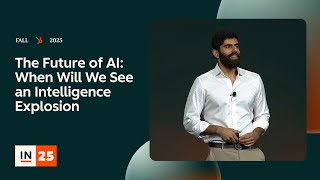
Setting the Stage: Defining AGI
0:03 - 0:30
Defining the scope of the discussion by focusing on AI capable of knowledge work.
AGI Definition
Knowledge Work
The Range of Predictions
0:30 - 1:16
Exploring the diverse opinions on when AGI will be achieved, ranging from near-term to distant future.
AGI Timelines
Expert Disagreement
The Transformative Impact of AGI
1:16 - 1:32
Anticipating the significant changes AGI could bring once it can perform human-level work.
Transformative Impact
Human-Level Work
Current AI Capabilities and Economic Value
This module acknowledges the impressive capabilities of current AI models while questioning their li...
This module acknowledges the impressive capabilities of current AI models while questioning their limited economic impact compared to their apparent intelligence, leading to the identification of key limitations.
Incredible Capabilities of Current Models
1:32 - 1:59
Highlighting the reasoning and problem-solving abilities of modern AI.
Reasoning Abilities
Problem Solving
The Economic Value Paradox
1:59 - 2:54
Contrasting the perceived intelligence of AI with its relatively smaller economic value compared to commonplace companies.
Economic Value
AGI Implications
The Potential Economic Impact of AGI
2:54 - 3:18
Estimating the potential economic value of AGI based on the wages of knowledge workers.
Economic Impact
Knowledge Workers
The Bottleneck: Continual Learning
This module dives deep into the core problem of AI's inability to learn on the job, comparing it to ...
This module dives deep into the core problem of AI's inability to learn on the job, comparing it to human learning and dismissing potential solutions like system prompt rewriting and longer context windows.
AI's Inability to Learn on the Job
3:18 - 3:52
Explaining why the lack of continual learning hinders AI's ability to perform effectively in real-world scenarios.
Continual Learning
Human Learning
The Saxophone Analogy
4:46 - 5:30
Illustrating the limitations of text-based learning in AI through a comparison to teaching a child to play the saxophone.
Text-Based Learning
Practical Experience
Insufficient Solutions: Context Windows and RL
5:43 - 6:29
Arguing that longer context windows and reinforcement learning alone are not sufficient to overcome the lack of continual learning.
Context Windows
Reinforcement Learning
AI Adoption Challenges and the Future of AGI
This module explores why large companies aren't readily adopting AI and emphasizes that solving the ...
This module explores why large companies aren't readily adopting AI and emphasizes that solving the continual learning problem will lead to a 'super intelligence' boom, where AI learns from the collective experience of all its instances.
Why Fortune 500 Isn't Adopting AI
7:45 - 8:50
Addressing the reasons behind the slow adoption of AI in large enterprises.
AI Adoption
Enterprise Workflows
The Super Intelligence Boom
10:10 - 10:51
Describing the potential for a rapid advancement in AI capabilities once continual learning is achieved.
Super Intelligence
Continual Learning
Digital Minds and Shared Learning
10:51 - 11:21
Highlighting the advantage of digital minds in learning from each other's experiences.
Digital Minds
Shared Learning
Predictions and Practical Applications
This module provides specific predictions for the timeline of AI development, focusing on computer u...
This module provides specific predictions for the timeline of AI development, focusing on computer use and continual learning. It also offers practical advice on how to leverage existing AI tools to improve productivity.
The Need for Computer Use
11:28 - 12:53
Explaining the importance of AI's ability to interact with computers for automating knowledge work.
Computer Use
Knowledge Work
Timeline Predictions: Computer Use and Continual Learning
12:53 - 16:34
Providing estimated timelines for achieving reliable computer use (2028) and continual learning (2032).
Computer Use
Continual Learning
AI Timelines
Leveraging AI for Productivity Today
20:46 - 25:07
Offering practical techniques for using existing AI tools to enhance personal and professional productivity.
Productivity Tools
Knowledge Document
Socratic Tutoring
Questions This Video Answers
What is the primary bottleneck preventing current AI from achieving AGI?
The main limitation is the inability of AI models to learn on the job, adapting to new information and experiences over time like humans do.
When does the speaker predict we will achieve reliable AI computer use?
The speaker estimates reliable AI computer use will be available around 2028.
What is the speaker's timeline for continual learning in AI?
The speaker predicts that continual learning in AI will be plausible by 2032.
Why isn't the Fortune 500 readily adopting AI to automate workflows?
The speaker argues that current AI lacks the ability to learn tacit information and adapt to specific company workflows, making it difficult to fully automate complex tasks.
What is 'super intelligence' in the context of this video?
It refers to a potential outcome where a single AI model learns from the experiences of all its copies across the economy, effectively mastering every job and surpassing human intelligence.
What practical advice does the speaker give for using AI tools now?
The speaker recommends creating a comprehensive knowledge document for LLMs containing onboarding information, meeting summaries, and email templates to improve their performance and relevance.
Related Videos
Want to break down another video?
Break down another video